
hr-uconn-health-signature

Timothy Duerr, PhD. – BME Spring 2026 Seminar Series

Cellular and molecular mechanisms regulating proximodistal positional identity during axolotl limb regenerationTimothy Duerr, PhD.
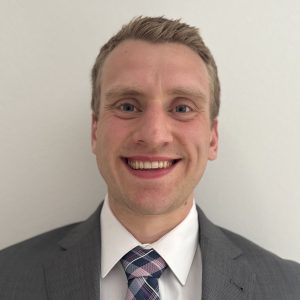
Research Scientist
Institute for Chemical Imaging of Living Systems (CILS)
Northeastern University

Timothy Duerr
Research Scientist
Institute for Chemical Imaging of Living Systems (CILS)

Northeastern University


Friday, April 10, 2026 10:45am – 11:45am; PWEB 150

Abstract: Timothy Duerr received his Ph.D. in 2021 from Northeastern University, where he studied limb regeneration in the axolotl salamander with Dr. James Monaghan. He continues his work on limb regeneration as a research scientist at the Institute for Chemical Imaging of Living Systems at Northeastern University, where he develops tools for imaging tissue regeneration, and most recently identified a novel mechanism for establishing proximodistal positional identity during limb regeneration.

Biography: Axolotl salamanders can regenerate their limbs following amputation anywhere along the proximodistal (PD) axis. During this process, resident connective tissue cells, including dermal fibroblasts and periskeletal cells, dedifferentiate and accumulate at the limb stump to form a blastema. Blastema cells retain their genetically encoded PD positional identity, enabling them to redifferentiate and regenerate the appropriate PD limb structures. Retinoic acid (RA) signaling is essential for establishing PD positional identity, as elevated levels of RA instruct blastema cells to adopt a proximal limb identity. We found that RA concentration along the PD axis is regulated by Cyp26b1 expression, which degrades excess RA to generate distal identity during limb regeneration. These differences in RA concentration lead to differential expression of homeobox genes that provide blastema cells with the correct PD positional identity. One such gene identified was Shox, which we show is required for activation of the PTHrP/IHH feedback loop in regenerating chondrocytes of proximally amputated limbs. Once blastema cells genetically adopt positional identity via RA, they express PD-specific cell surface proteins that modify cellular adhesivity. This enables self-sorting with cells of similar positional identities. We have identified several cell surface proteins, including LPHN2, TENM4, and FLRT3 that follow the same spatiotemporal expression patterns as 5’ Hox genes and are both RA responsive and differentially expressed between proximally and distally amputated limbs. Collectively, our results support a model whereby RA directs blastema cells to establish PD identity through transcription factors that regulate the expression of positional identity-specific cell surface proteins.
For additional information, please contact Dr. Visar Ajeti or Darcy Richard
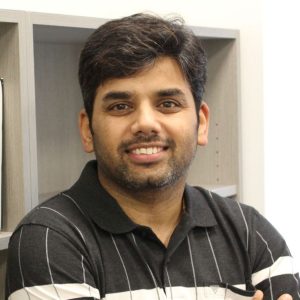

Dr. Vijay Vedula-BME Spring 2026 Seminar Series

From Myocardial to Myometrial Digital Twins

Dr. Vijay Vedula
Assistant Professor of Medical Engineering
Columbia University

Friday, April 24, 2026 10:45am – 11:45am; PWEB 150

Abstract: Digital Twins are dynamic virtual replicas of real-life objects, ‘living’ in synchrony with their physical counterparts. While their industry-transforming success has enabled the rise of smart cities, remote monitoring (aerospace, automotive), virtual prototyping (manufacturing), etc., challenges remain in their application to life sciences and healthcare, despite the promise for precision medicine. In this talk, we will discuss our progress toward creating digital twins for two such applications: a heart (myocardium) and a gravid uterus (myometrium), which share many similarities but are substantially different. In the first part, I will present our recent work on developing personalized models of cardiac mechanics and blood flow (cardiac digital twins), particularly for the left atrium and biventricle. Our multiscale, multiphysics modeling framework centers on the question: “Given multimodal data for a patient, how can we best approximate the model parameters to reproduce clinical observations?” In the second part, I will discuss our approach to modeling uterine mechanics from patient image data during pregnancy, drawing parallels with cardiac mechanics. We will use both models to elucidate the role of mechanics in the functioning of these organs under normal and pathological conditions, highlight the role of machine learning, and provide a roadmap for future clinical translation.
Biography: Dr. Vijay Vedula is an Assistant Professor in the Mechanical Engineering department at Columbia University, where he directs the Cardiovascular Biomechanics Research Lab (CBRL). He began his academic training in India (a bachelor’s in mechanical engineering from NIT Trichy, followed by a master’s in aerospace engineering from IIT Kanpur), earned a Ph.D. in Mechanical Engineering from Johns Hopkins University, and underwent postdoctoral training at UCSD and Stanford. Dr. Vedula’s research is highly interdisciplinary, spanning computational biomechanics, fluid-structure interaction, 3M modeling (multiscale, multiphysics, and multifidelity), and, more recently, inverse problems and data-driven modeling for personalization. He is a recipient of multiple awards and fellowships, including a postdoctoral fellowship from the Child Health Research Institute at Stanford University, a von Karman visitor fellowship at RWTH Aachen University, an Early Faculty Independence Award from the American Heart Association (AHA SCEFIA), and, more recently, the NSF CAREER award.

For additional information, please contact Dr. Visar Ajeti or Darcy Richard

Dr. Nukavarapu appointed next BME Department Head

Professor Syam Nukavarapu will be assuming the role of the Biomedical Engineering department head, effective August 23, 2024. He is currently serving as an Interim Head of Biomedical Engineering. He is a Professor in Biomedical Engineering and holds joint appointments in the Department of Materials Science and Engineering, UConn, and the Department of Orthopedic Surgery, UConn Health.

 Professor Nukavarapu brings a wealth of experience and expertise to the BME Department Head position. Throughout his career, he has made significant contributions to the field of biomaterials science and engineering. His research interests span biomaterials, bioprinting, and tissue engineering with an emphasis of tissue-tissue interface engineering. He made seminal contributions to the development of engineered grafts and understanding biomaterial/graft interactions with cells and tissues. Professor Nukavarapu’s research has been funded by federal, state as well as private foundations. His contributions, including over ninety peer-reviewed articles and book chapters, numerous proceedings, and invited presentations, as well as three patents, have been invaluable to the advancement of the field.

Professor Nukavarapu currently serves on the editorial boards of major journals, including Biomaterials, Bioactive Materials, and Tissue Engineering. His active involvement in national/international professional societies, such as BMES, SFB, and MRS, reflects his dedication to scholarly pursuits and national leadership. He has received numerous research and education awards, including the Distinguished Engineering Educator Award, Castleman Professorship in Engineering Innovation, AAUP Teaching Excellence Award, and member-elect of the Connecticut Academy of Science and Engineering.

Martin Han receives grants for research on neural implants for hearing loss


Associate Professor Martin Han received two grants totaling over $1.5 million from the NIH.  He will use the support to develop silicon-based microelectrode technology that will serve as an auditory prostheses implanted in the brainstem’s cochlear nucleus to convey the features of sound to people with profound hearing loss and to design and fabricate various neural implant devices suitable for preclinical animal models.

Associate Professor David M. Pierce receives National Science Foundation CAREER Award


Associate Professor David M. Pierce received a National Science Foundation CAREER award for his research “Understanding Collagen Microcracks in Soft Tissues Under Normal Body Loads.”  This prestigious award of $500,000 will allow Dr. Pierce’s Interdisciplinary Mechanics Laboratory to study how collagen microcracks propagate in human cartilage, a phenomena that may lead to pre-clinical osteoarthritis

Highlighting New Faculty

Highlighting New Faculty

Associate Professor Martin Han, a joint appointment in the Institute of Materials Science, researches implantable microelectrode arrays to treat neurological disorders using semiconductor fabrication technologies.  He is also interested in the interface of the brain and microelectrode devices.  Dr. Han’s research is supported by the NIH.


Assistant Professor Insoo Kim’s research narrows the gaps between larger clinical grade devices and newly developed mobile and wearable health sensors in terms of hardware, algorithms, and signal processing techniques.  Dr. Kim’s research develops wearable biosensors, bio-circuit systems and therapeutic devices for use in diagnostics and monitoring of chronic diseases such as hypertension, diabetes, obesity, and sleep disorder.


Assistant Professor Kristin Morgan received an NIH Program for Excellence & Equity in Research Fellowship and the Lyman T. Johnson Postdoctoral Fellowship at the University of Kentucky.  Dr. Morgan’s research will work with the Department of Kinesiology to study how changes in muscle function alter gait patterns and joint stability.

Guoan Zheng Receives National Science Foundation Grant

Assistant Professor Guoan Zheng received a $200,000 National Science Foundation grant entitled “Developing high-throughput whole slide imaging platform using single-frame instant-focusing scheme”.  This grant will allow Dr. Zheng to develop and commercialize a high-throughput whole slide imaging platform.

Ki Chon Awarded Patent for Physiological Parameter Monitoring

Professor Ki Chon was awarded a patent on July 25, 2017  for systems and methods that enable physiological monitoring with a mobile communication device and that allow detection of motion artifacts so that the results reported are of acceptable quality.

Syam Nukavarapu Awarded Patent for Gradient Porous Scaffolds

Assistant Professor Syam Nukavarapu was awarded a patent on July 18, 2017 for gradient porous scaffolds for bone regeneration and osteochondral defect repair, methods to make the gradient porous scaffolds, and methods to use the gradient porous scaffolds.

Senior design team attends Rice 360 Design Competition in Houston

BME Senior Design Team #2: Sarah McGee, Katelyn Houlihan, Courtney Mulry, Cailah Carroll, Celine Agnes, Rosalie Bordett, Dr. Bin Feng

Because of the my OUR Travel Award, the entire senior design team was able to travel to Houston to attend the conference. The money helped us to represent UConn and for us to gain valuable feedback regarding our prototype. We got the opportunity to interact with amazing researchers and hear from Tore Laerdal who was the keynote speaker at the global health technology conference. His organization is huge increasing products that promote KMC in third world and developing countries. We got to hear his thoughts on our project. Overall this conference really helped to shape me into a more confident individual and helped us immensely with designing the future of our project.

Project Summary

This project was our biomedical engineering senior design project. Through this project we hoped to create a device that would accurately determine and measure the amount of skin contact and time that a mother has with their newborn baby. The client wanted the device to begin measuring time when contact was initiated and stopped recording when the contact is broken. The goal was for him to bring the device to India to test and determine the amount of skin contact and time that is required for improvements in the baby’s health. The researchers currently know that kangaroo mother care is effective but they don’t know how much time is actually effective. In order to combat this problem the team used a raspberry pi and arduino along with a lily pad temperature sensor and capacitive touch hat in order to create a device that would do this. The team applied to and got selected as one of the top 20 teams internationally in the Global Health Technologies Competition and got invited to come down to Houston to present. The team is now in the process of creating a new prototype that will do the same and measure the contact but the results will be transmitted wirelessly to an app on the phone. The team is extremely proud of all the work they have accomplished this year and is very thankful to the OUR grant for helping them to begin designing the new prototype by allowing us to go to Houston and speak to clinicians and nurses.