
From Myocardial to Myometrial Digital Twins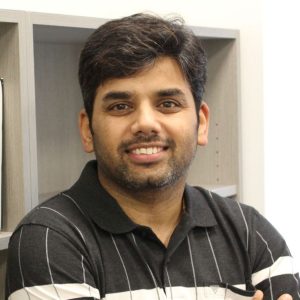
Dr. Vijay Vedula
Assistant Professor of Medical Engineering
Columbia University
Friday, April 24, 2026 10:45am – 11:45am; PWEB 150
Abstract: Digital Twins are dynamic virtual replicas of real-life objects, ‘living’ in synchrony with their physical counterparts. While their industry-transforming success has enabled the rise of smart cities, remote monitoring (aerospace, automotive), virtual prototyping (manufacturing), etc., challenges remain in their application to life sciences and healthcare, despite the promise for precision medicine. In this talk, we will discuss our progress toward creating digital twins for two such applications: a heart (myocardium) and a gravid uterus (myometrium), which share many similarities but are substantially different. In the first part, I will present our recent work on developing personalized models of cardiac mechanics and blood flow (cardiac digital twins), particularly for the left atrium and biventricle. Our multiscale, multiphysics modeling framework centers on the question: “Given multimodal data for a patient, how can we best approximate the model parameters to reproduce clinical observations?” In the second part, I will discuss our approach to modeling uterine mechanics from patient image data during pregnancy, drawing parallels with cardiac mechanics. We will use both models to elucidate the role of mechanics in the functioning of these organs under normal and pathological conditions, highlight the role of machine learning, and provide a roadmap for future clinical translation.
Biography: Dr. Vijay Vedula is an Assistant Professor in the Mechanical Engineering department at Columbia University, where he directs the Cardiovascular Biomechanics Research Lab (CBRL). He began his academic training in India (a bachelor’s in mechanical engineering from NIT Trichy, followed by a master’s in aerospace engineering from IIT Kanpur), earned a Ph.D. in Mechanical Engineering from Johns Hopkins University, and underwent postdoctoral training at UCSD and Stanford. Dr. Vedula’s research is highly interdisciplinary, spanning computational biomechanics, fluid-structure interaction, 3M modeling (multiscale, multiphysics, and multifidelity), and, more recently, inverse problems and data-driven modeling for personalization. He is a recipient of multiple awards and fellowships, including a postdoctoral fellowship from the Child Health Research Institute at Stanford University, a von Karman visitor fellowship at RWTH Aachen University, an Early Faculty Independence Award from the American Heart Association (AHA SCEFIA), and, more recently, the NSF CAREER award.
For additional information, please contact Dr. Visar Ajeti or Darcy Richard
Published: Mar 23, 2026